


The speaker is Dr. Riad Moalem, Head of the Department of Natural and Environmental Sciences at Oranim College and a teacher at Ramot Zvulun School.
When I launched the “Yes to Zippori Stream" initiative at Ramot Zvulun School, I had a clear vision: to raise awareness among students about the importance of nature conservation and to connect them to their heritage and immediate environment. The Zippori Stream, which flows through the communities of Ras Ali, Hawald and Ibtin, is not only an ecological asset but also part of the history and culture of the local communities. Therefore, it was important to me that the students see it not only as a source of water, but as part of their heritage and an environmental challenge for which they can take responsibility. At the outset, the environment was not among the students’ priorities. Questions like “What can I do for the stream?” were not part of their daily routine. Therefore, we structured the learning around personal and community-based approaches.
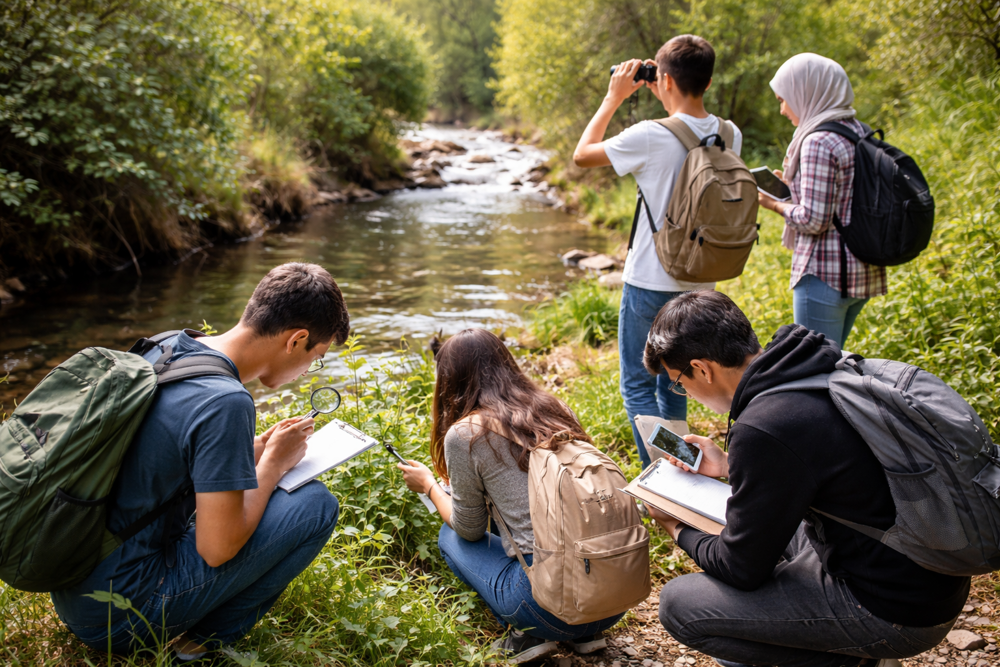
We started with personal stories and the history of the stream, connected the topic to the biology curriculum, and incorporated hands-on fieldwork. The students learned to identify biodiversity using the iNaturalist app, conducted observations, measured environmental parameters, and recorded the data as part of a real-world citizen science project. The turning point came when the students began to show genuine interest, they looked forward to the next field trips and started organizing outings on their own. For me, this project was just as much a learning journey as it was for the students.
At the outset, I was apprehensive, would students from disadvantaged socioeconomic backgrounds, whose daily needs take center stage, be able to connect with environmental issues? But I saw that despite the challenges, it is possible to instill in them a love and respect for nature, not as a resource to be exploited but as a partner in life. I learned that when education integrates values, identity, and action, it becomes a driving force for real change. Additionally, a broad systemic approach was an integral part of the project. the collaboration between the local authority, the two schools (Ramot Zvulun and Carmel Zvulun), the professional guidance of the Technion and the University of Haifa, and the school system that prioritized the issue, created a supportive environment that enabled students to believe in their ability to effect change. Against all odds, the students became a driving force in raising environmental awareness, leading to responsibility and the preservation of the region’s ecological heritage. Today, I am certain that the seeds planted through this project will continue to sprout and grow into active citizenship and environmental engagement that will influence future generations.
Comments
0No comments yet. Yours could be the first.