


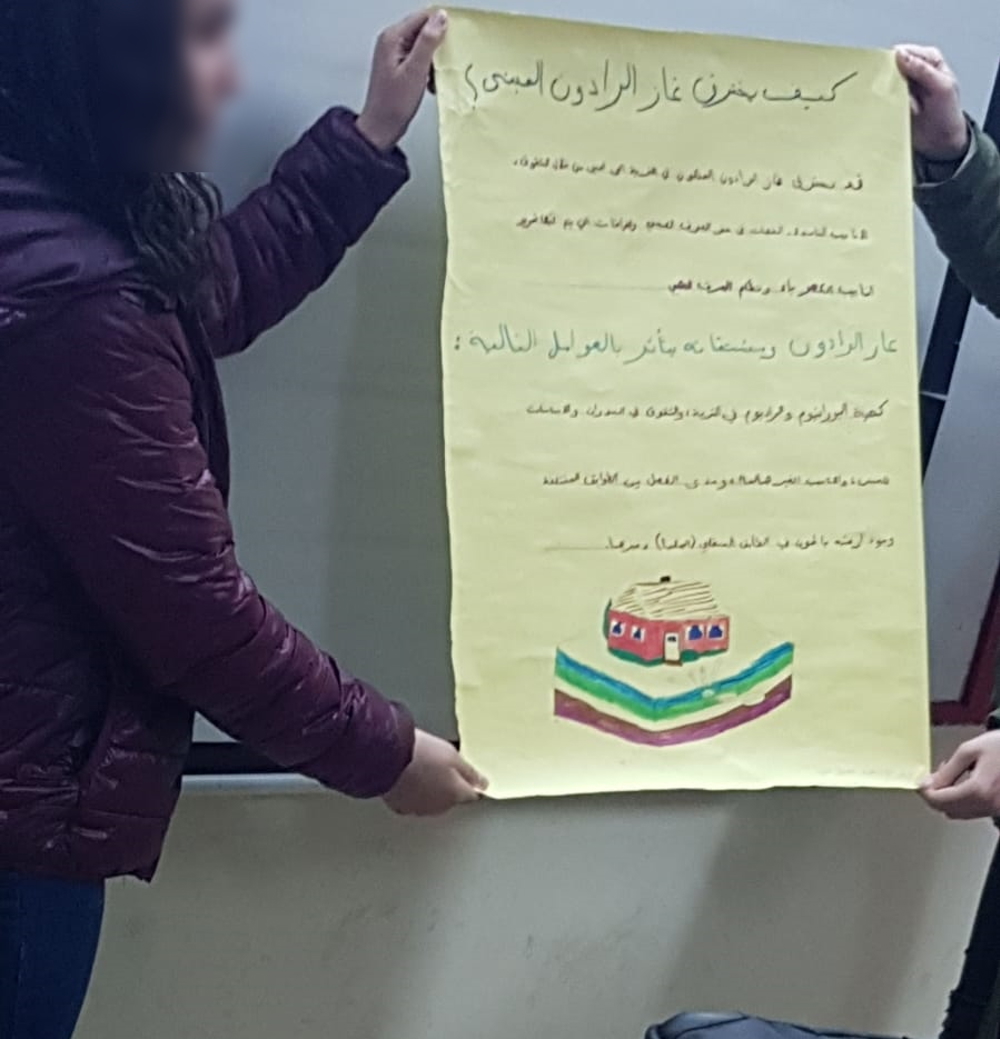
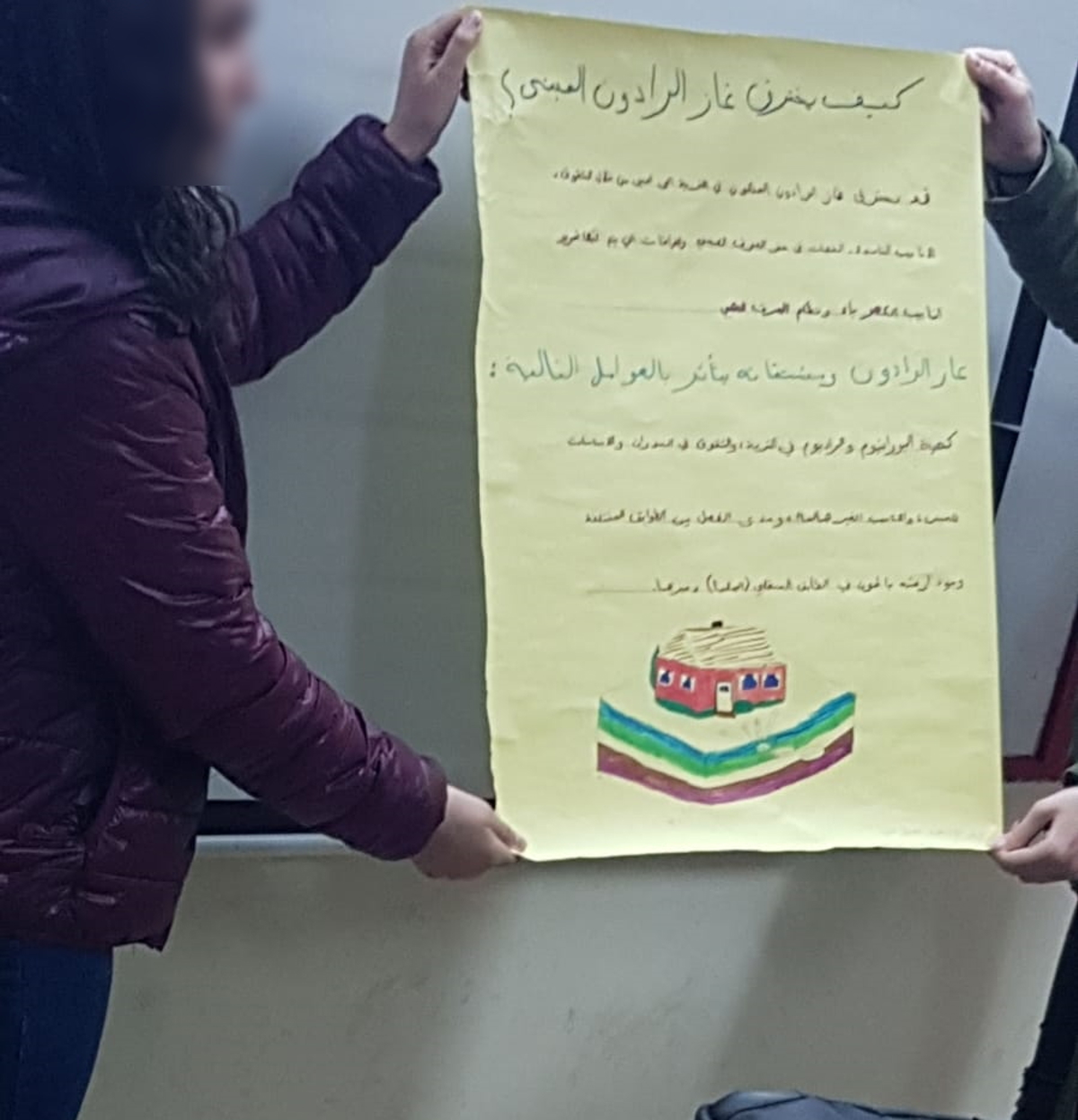
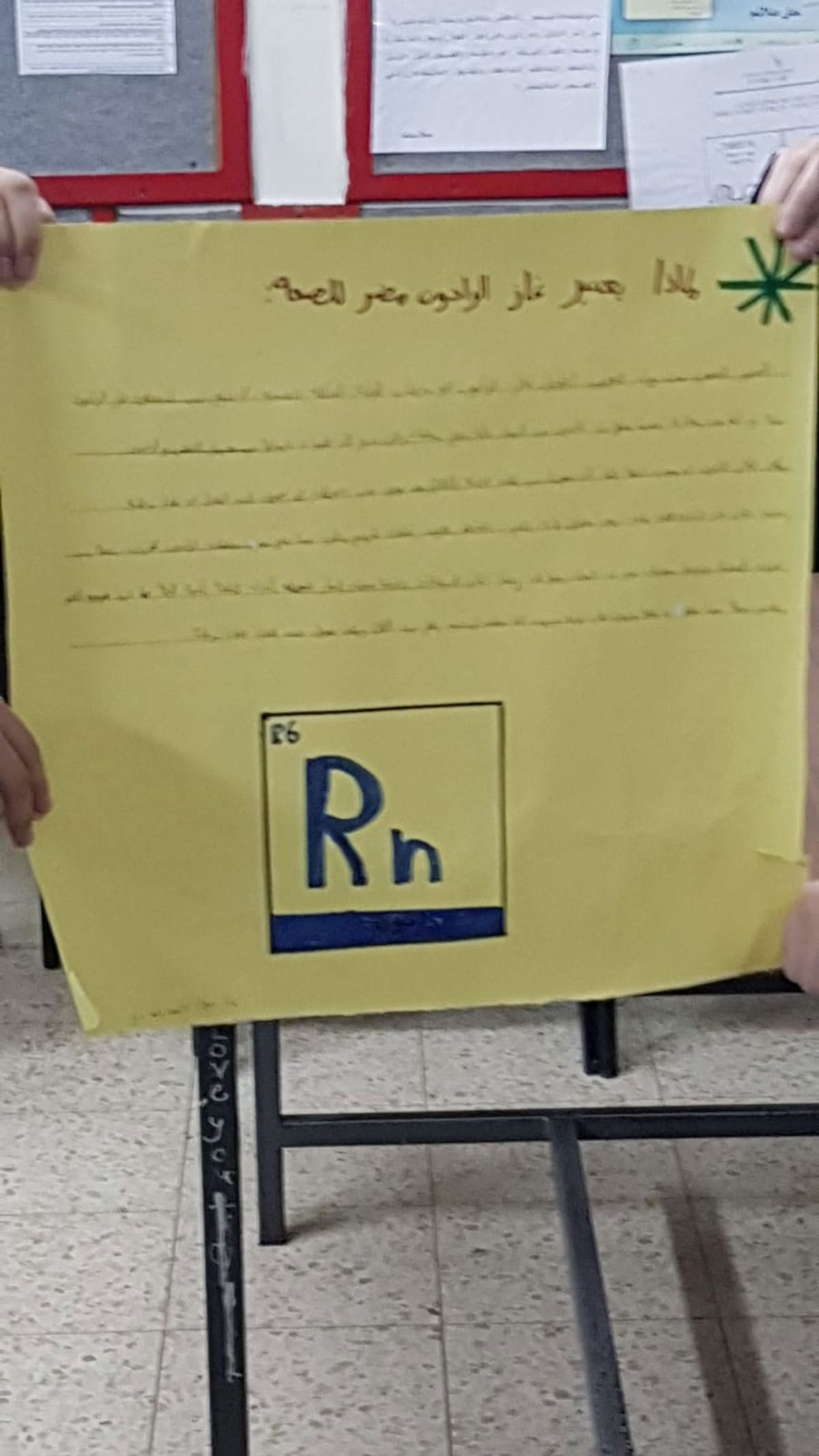
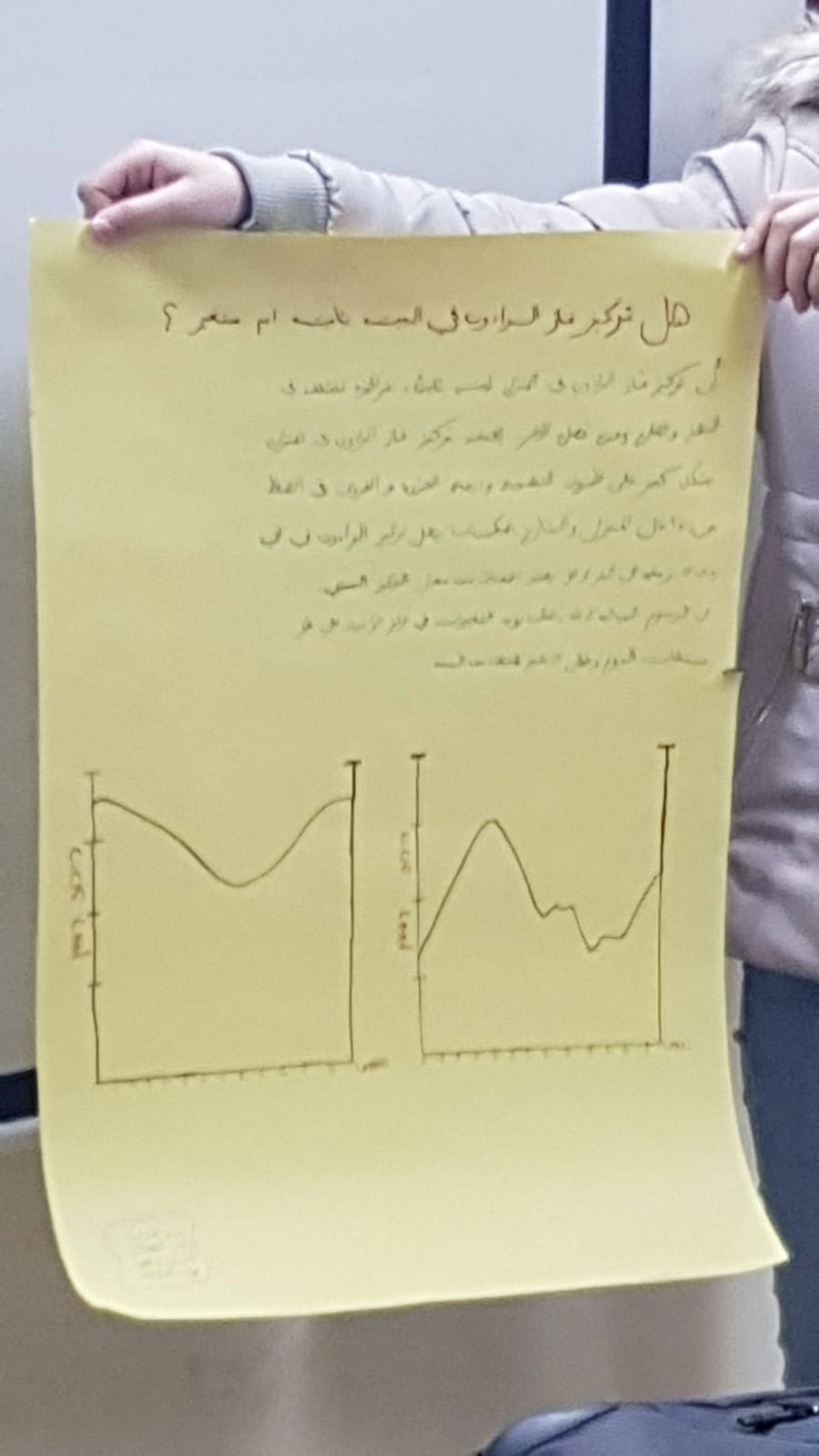
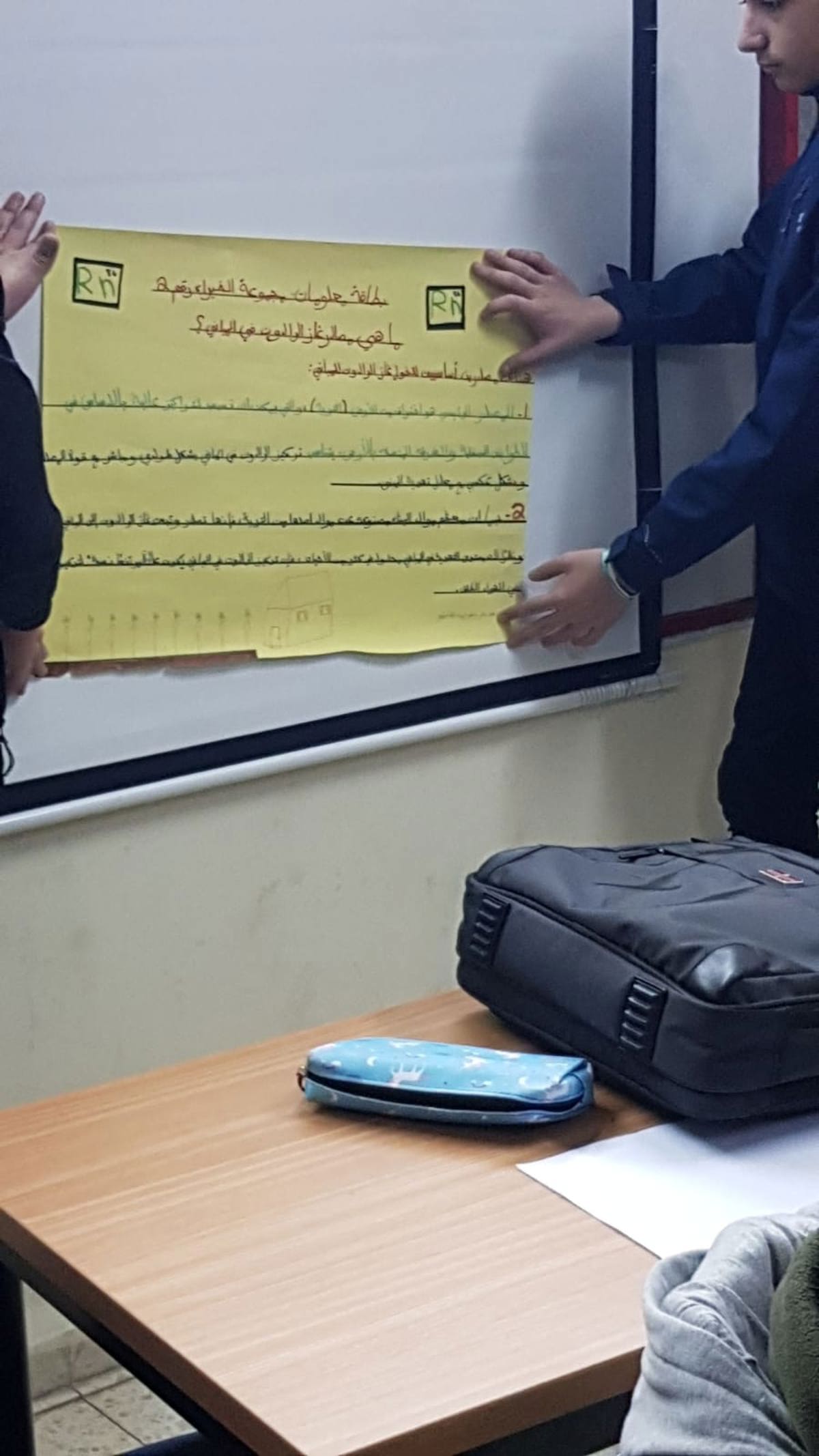
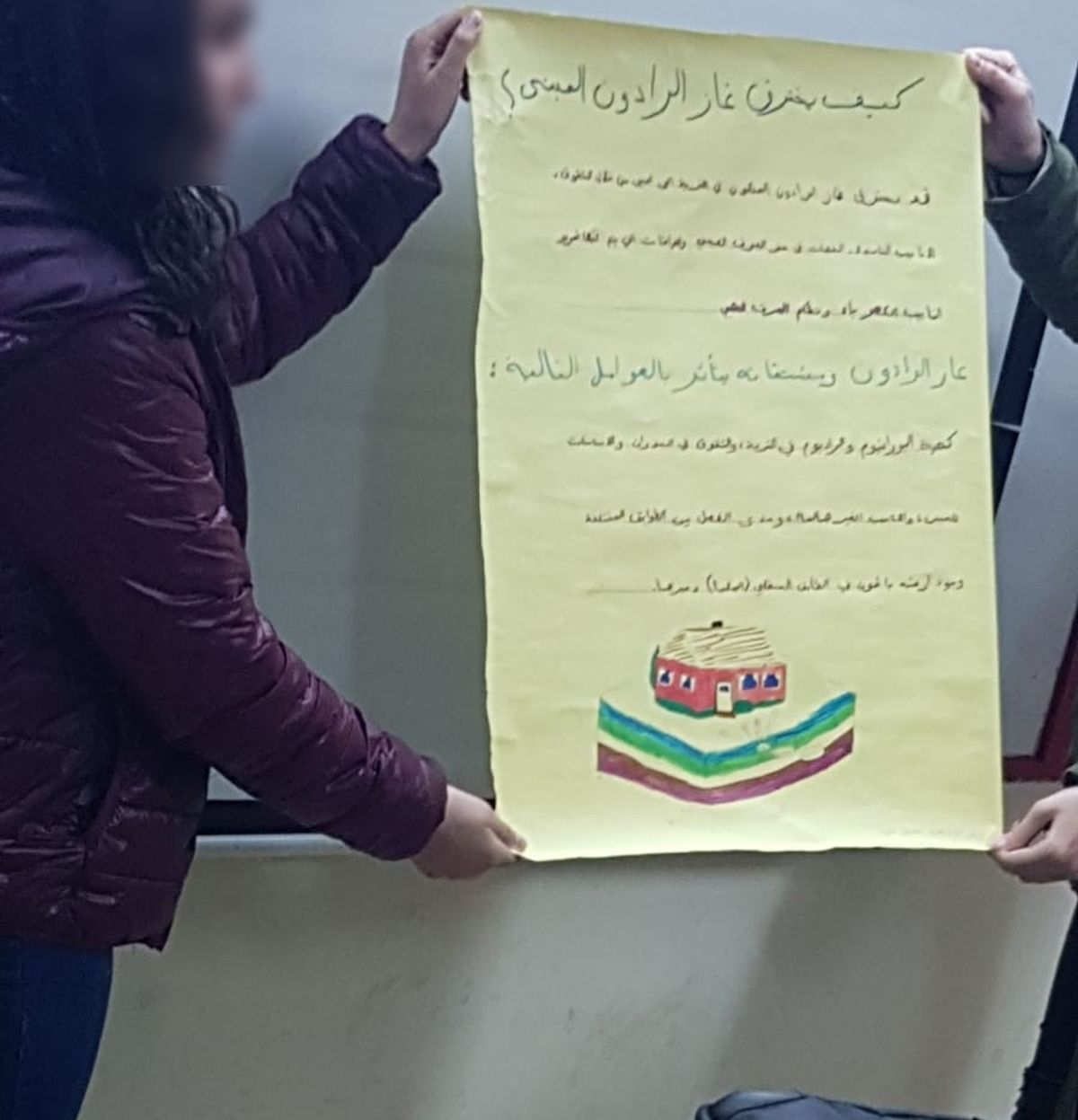
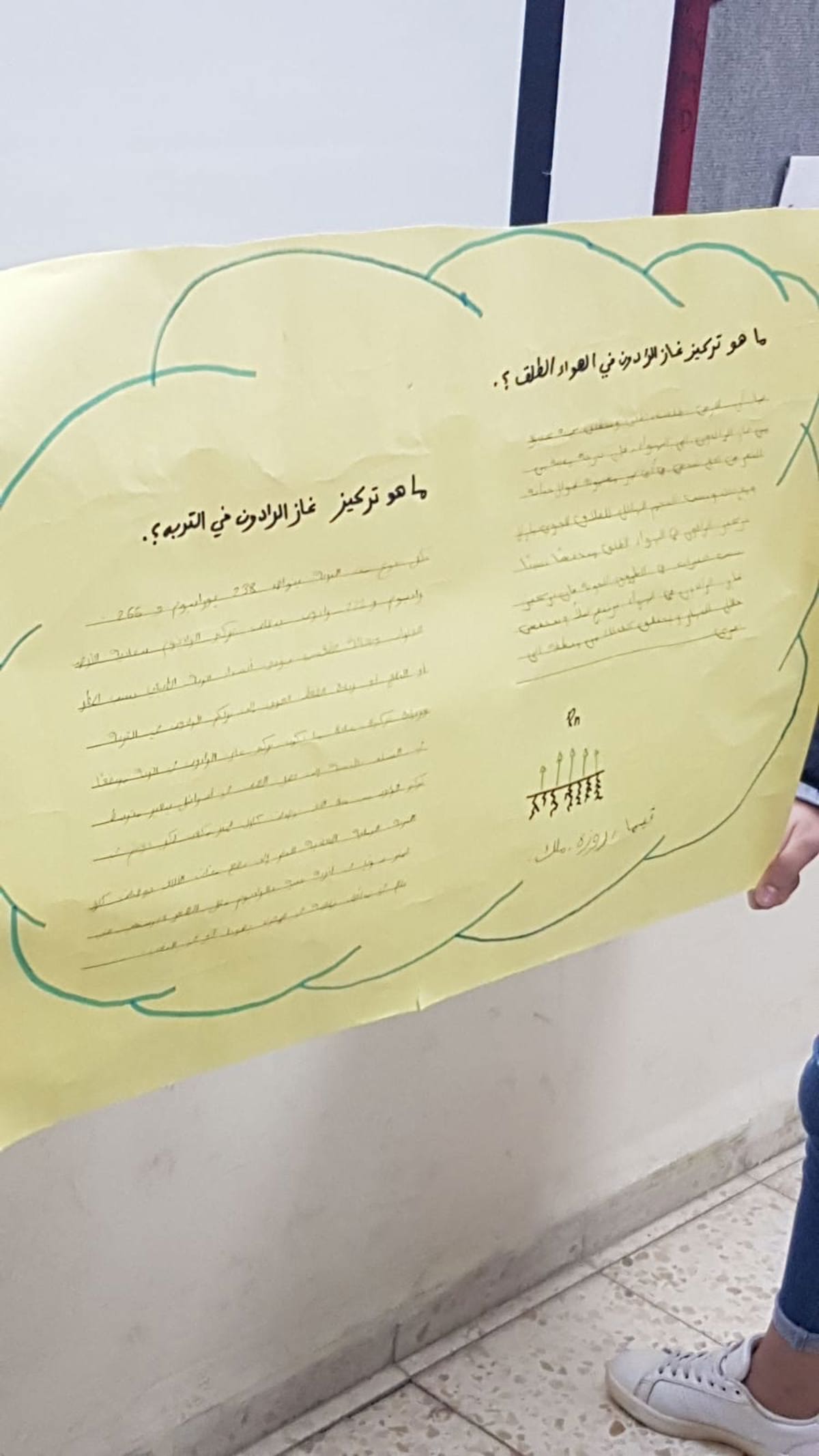
As part of the radon project, students were expected to learn about radon gas from a learning unit written specifically for this purpose. The unit was taught by ninth-grade teachers in Beit Jann and in the Golan Heights, with the aim of deepening understanding of the topic and preparing students to measure radon concentrations in their own homes. One of the activities was conducted using the Jigsaw method. During the activity, the class was divided into five "home groups." The purpose of the home groups was to deepen knowledge of radon across its different aspects. To this end, each student in a home group received a task: to become an expert in a specific topic by participating in an expert group devoted to that topic. Each expert group received an information sheet dealing with a topic related to radon, for example: How does radon enter a building? What is the concentration of the gas in the air? Why is it dangerous? And more. In the expert groups, students studied the information they received together, were asked to expand their knowledge beyond the information sheet, and to become specialists in it. They then returned to their home groups and taught their group members about the topic in which they had specialized. At the end of the activity, each home group summarized what it had learned on a poster and presented the content to the other groups. At the school in the Golan Heights, the posters were hung in one of the school's hallways in order to share the material with other students and announce the project that had gotten underway. This experience allowed students not only to acquire knowledge, but also to become experts within their community, a community that included other students and parents. They felt that they were the source of knowledge, that they were capable of, and even wanted to, talk about science.
More resources


Comments
0No comments yet. Yours could be the first.