



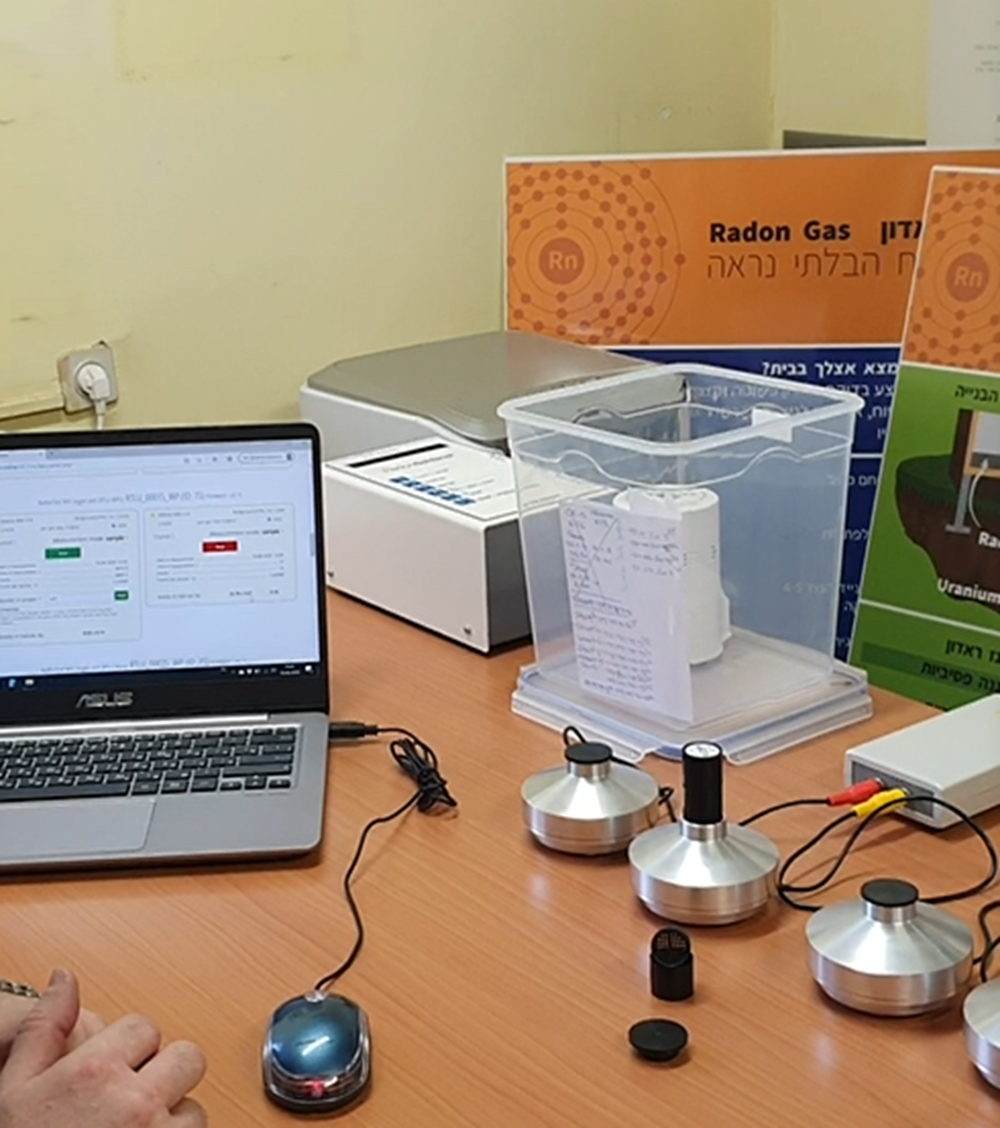
As part of the radon project, high school students from northern Israel received activated charcoal vials to place in their homes and monitor the amount of radon that would accumulate in their rooms. The students, who were enthusiastic and curious, searched for "interesting" or more "unusual" locations in which to place the vial in order to produce high radon readings. After the vials were collected and analyzed in the laboratory, we immediately noticed several anomalous measurements. When we offered our assistance in visiting those homes and conducting long-term radon measurements, we discovered the great enthusiasm of the students who "wanted to find radon," and understood that they had placed the vials in unusual locations such as sealed basements and storage rooms, with the aim of producing high radon readings. The research team was concerned by the behavior of the students, who had been asked to measure radon in their own rooms, where they spend considerably more time than in other places. As a result, there is a greater likelihood that they would be spending time in locations with high radon concentrations, and they could be at risk of various illnesses such as lung cancer as a result of prolonged exposure. Our vigilance and sensitivity as scientists and researchers toward every measurement that arrived at the laboratory led us to examine this in depth and to consider various explanations for the students' behavior during their participation in the project.
Comments
0No comments yet. Yours could be the first.