


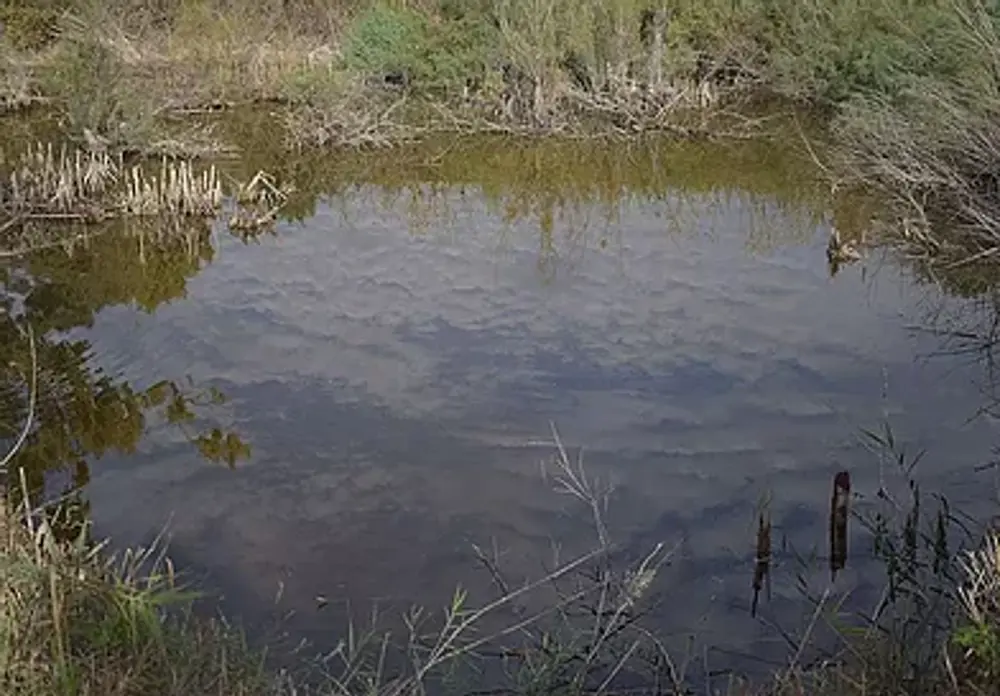
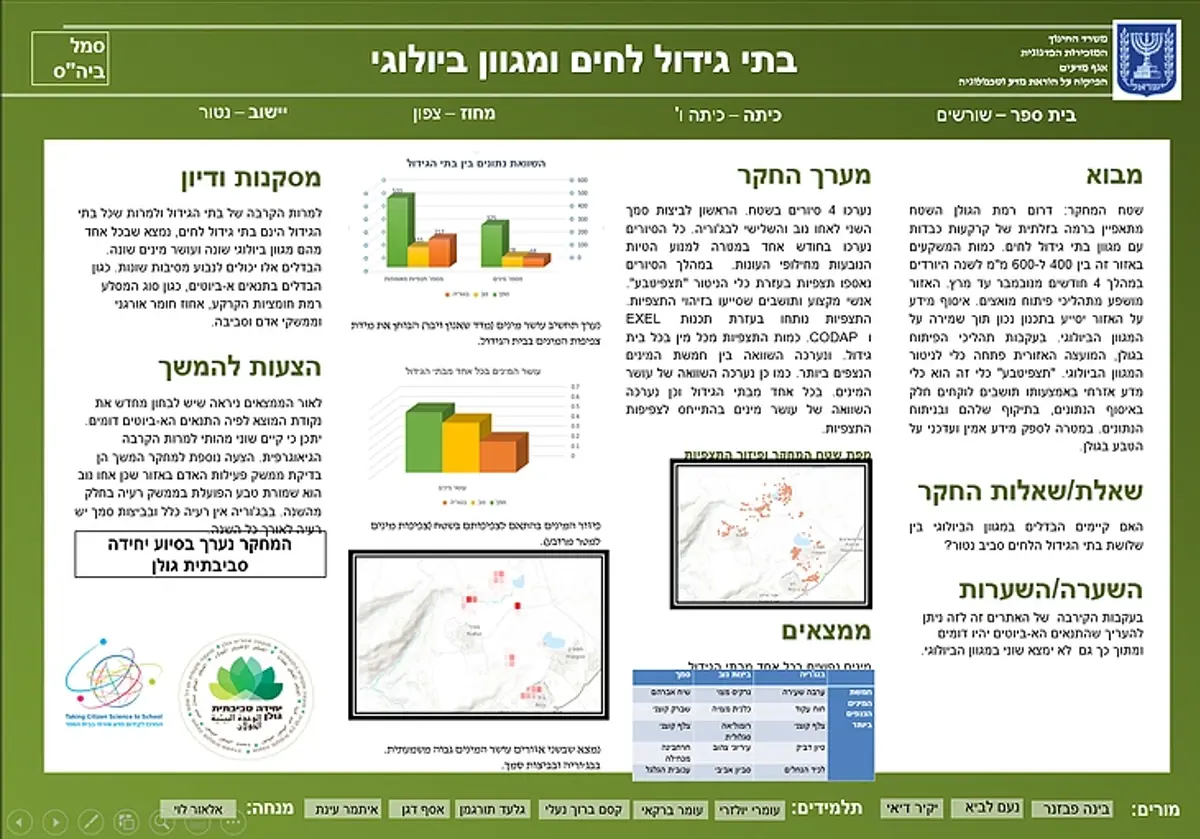
Sixth-grade students at Shorashim School used the “TatzpiTeva” monitoring tool to compare biodiversity across three wetland habitats in the southern Golan Heights. Their research was conducted as part of the science inquiry initiative, with support from the Golan Environmental Unit. The students went out on numerous excursions in their immediate environment, ten of them to streams, during which they collected data on species diversity and richness (using the "TatzpiTeva" app) as well as abiotic water data (acidity, conductivity, and turbidity). Through observation in the field and analysis of the data, they discovered differences between the sites and searched for reasons related to human impact. One hypothesis was that cattle grazing has an effect on species diversity. In light of this, they conducted further research, examining cattle types and grazing pressure and making comparisons between the sites. Approximately 1,500 data points were collected over the course of the program and were processed using CODAP. The results showed that there was no overlap in species between the three streams, and that cattle grazing pressure had a significant effect.
More resources


Comments
0No comments yet. Yours could be the first.