

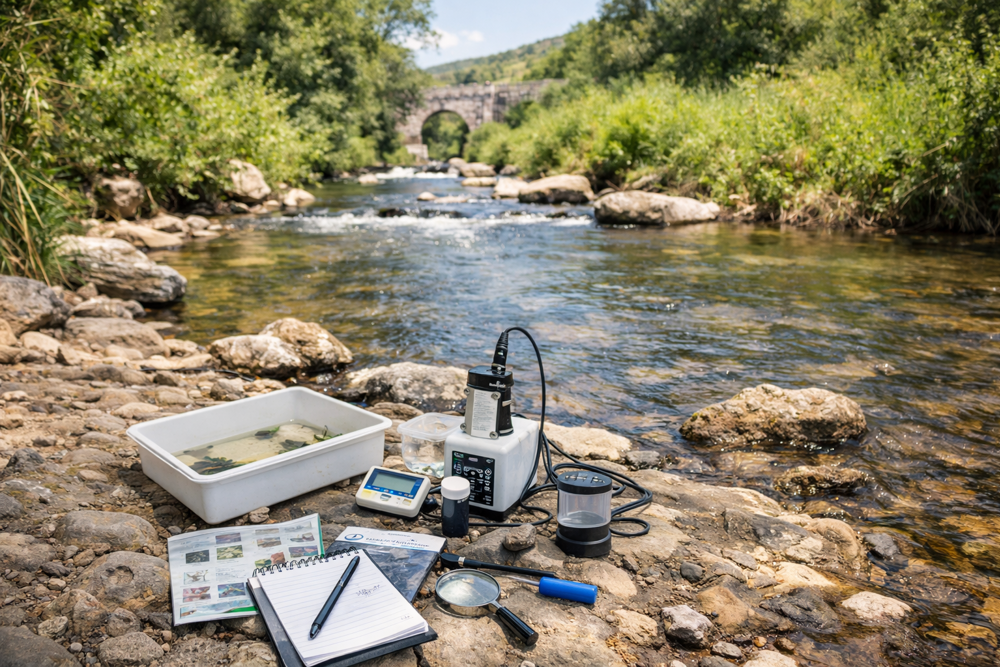
Galit Hagi, a Ph.D. in science education and biology teacher at Carmel Zvulun High School, led the 12th-grade biology track students to participate in the “Yes to Zippori Stream” initiative, part of the global Merlin Project. The goal of the project was not only practical learning about ecology but also connecting the students to their immediate environment, as many of them live in the area surrounding the revitalized stream. Galit saw the project as a unique pedagogical opportunity—real ecological research in the field, rather than theoretical learning in the classroom. Returning to the stream allowed the students to observe changes occurring over time, gain a deep understanding of the restoration processes, and experience real scientific research. While there was excitement during the first visit, later on, as the students became familiar with the environment and knew what to look for, they were able to focus on collecting and analyzing data.
At the same time, the activity took on a social dimension, incorporating experiences such as cooking in nature and baking pita bread on a taboon. The students’ involvement in the project extended beyond the school and became part of a global initiative. Their reports received responses from scientists and participants around the world, and they realized they were part of an international community sharing the same challenges and research questions. However, Galit and the students also faced challenges. Not every student adapted easily to being in the field, and some struggled with the sun or the long walks. Another challenge was the need for permits for additional activities, such as entering the water, as well as the logistical arrangements for bringing lab equipment into the field. The weather also presented an unexpected challenge, as it was not always possible to change the departure date according to conditions. In hindsight, Galit saw how persistence and returning to the field time and again contributed greatly to the students’ learning and connection to the project. She noted that in the future, she would like to spread the activities out over the course of the year to observe greater differences, incorporate practical collaboration with other schools, and involve the community so that the students themselves lead the activities. Additionally, she would better prepare them in advance for using the digital technologies required during the research. Despite the challenges, Galit is confident that the project achieved its goal: it made learning biology tangible, experiential, and close to the students’ hearts. The connection between science, the community, and the field created an enriching experience, which she looks forward to continuing to develop in the future.
Comments
0No comments yet. Yours could be the first.