

Oren Mitz, a teacher at the Gifted and Talented Education Center in Kiryat Ata, took part in leading the projects “Mapping Accessibility in Public Spaces” and “Sleep – A Third of our Life” with fifth-, sixth-, and seventh-grade students. During the activities, he made unique adaptations to tailor the content to the needs and abilities of his students.
Not every subject allows for changes to the syllabus mid-year. Generally, the sciences and mathematics offer less flexibility than the humanities. The question is: what happens when a “civics” course is taught to a group of gifted students?
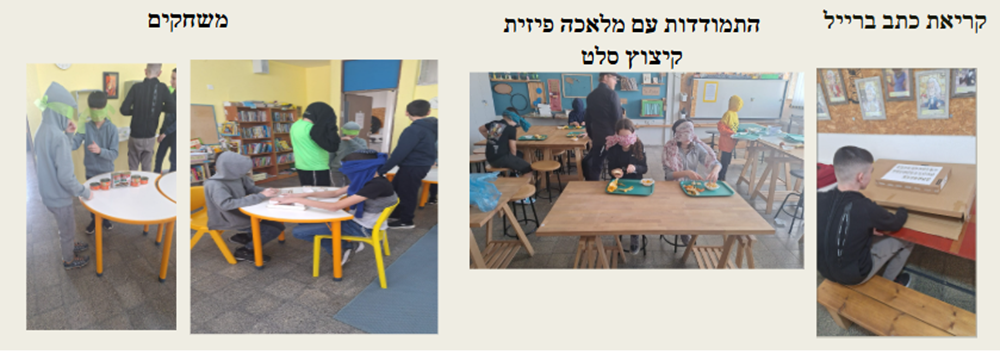
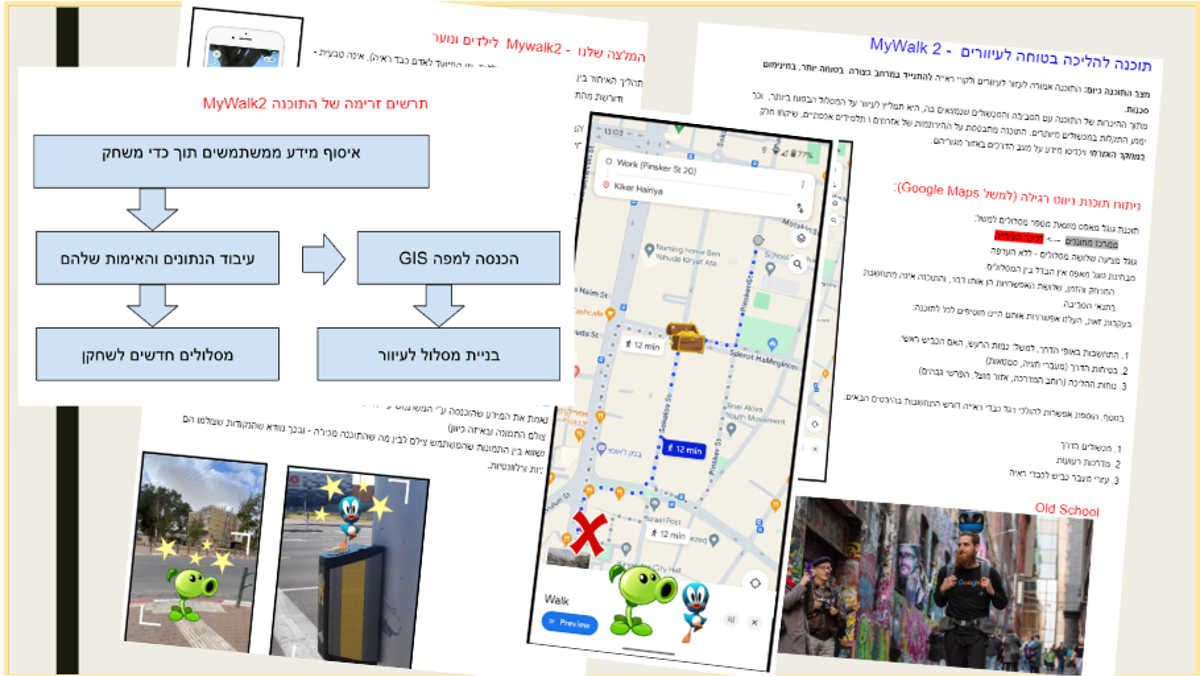
Courses at Gifted Education Centers have a dynamic character of their own: teachers may begin the semester with a clear plan, but the course often evolves in unexpected directions along the way. Regardless, the need to create more flexible lesson plans tailored to students’ needs is one of the requirements of 21st-century learning. The question of when a teacher should change the topic and when to stick to the subject being taught is one that even AI would likely struggle to answer. To do so, one must engage in frequent dialogue with the students and sense what is happening in the classroom. The first course in “Mapping Accessibility in Public Spaces ” at the Gifted Education Center in Kiryat Ata took several significant turns along the way. From a syllabus focused on fieldwork and surveying and mapping the urban area around the school, the course took on a social character and became technology-driven. The teacher Oren Mitz, who primarily teaches technology and science subjects, noticed that the students were unable to connect with the subject matter and were struggling to complete the original assignments, which included a multi-stage mapping project. Instead of avoiding the challenge, the idea arose to develop a new field survey software application. First, a process of characterizing the existing software and analyzing its users was carried out. Under the teacher’s guidance, the students decided to change direction. From professional mapping software designed for adults, the idea emerged to conduct the mapping through games, photography, and social challenges. The students took the initiative, created presentations, and developed new interface screens. They were the ones who tailored it specifically for children. The response to the initiative was enthusiastic, and at the end of the year, the students presented the new concept to Dr. Dalit Lan and Dr. Sagi Daliot, the project leaders. In return, the students received certificates of appreciation for their work from the “Taking Citizen Science to School” (TCSS) center at the University of Haifa. But the adaptations didn’t end there. Oren and the students realized that alongside the technological aspect, the emotional connection to the experiences of people with visual impairments is also of great importance. To deepen the students’ understanding of the world of the visually impaired, a blind lecturer was invited to share her personal experience. The meeting was very moving, and the students asked many questions. The session took place alongside an activity day that the students organized for the entire grade. On this day, the course students created experiential stations while blindfolded. In this way, they experienced, if only for a moment, the daily challenges faced by people with visual impairments, such as cutting a piece of salad, walking to the market, and reading Braille. One of the most meaningful moments in the project was when a student sent Oren a thank-you letter, noting that the experience of standing in front of an audience and presenting the project was one of the most significant experiences he had had at school. It was a moment that reflected the profound impact of the adaptations made in the project for the students’ benefit. Oren himself notes that this experience opened up new horizons for him in teaching. As a technology teacher, he discovered just how much technological innovation can be integrated with emotional experience and inquiry-based learning. Today, he continues to participate in additional citizen science projects, believing that this field is an excellent pedagogical tool for developing learning environments in the areas of research, statistics, and, of course, social studies. Ultimately, the changes made the project more tailored, enriching, and inspiring for both students and the teacher. Without these changes, the project would not have met the high expectations of today’s students.
More resources
Comments
0No comments yet. Yours could be the first.