

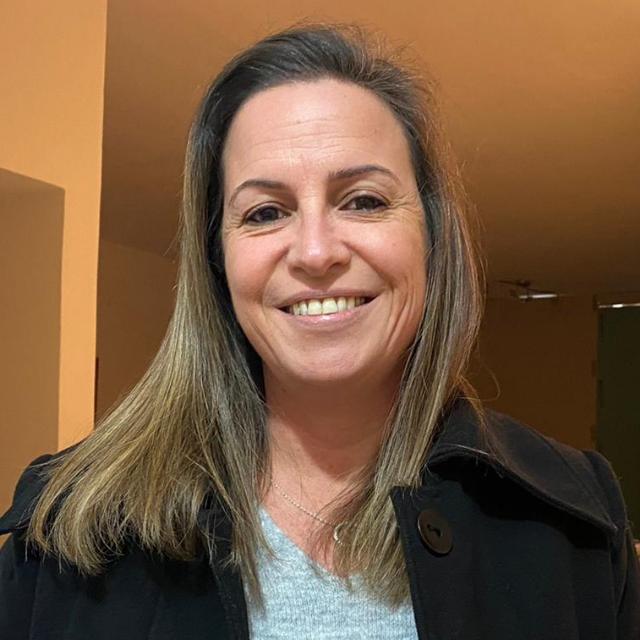

In an interview with the project’s co-founder, Shlomit Lipshitz, we discovered how a love of birdwatching and environmental education turned into a citizen science project that has engaged up dozens of schools and kindergartens across the country. For those unfamiliar with it, the activity is part of the annual bird count conducted every January. The project’s focus is on nature conservation and preserving biodiversity. To this end, participants get to know the wild birds in their neighborhoods, learn how to observe and count them, learn about the importance of nature conservation and citizen science, and count the birds. The data collected from across the country is analyzed under the guidance of a scientific advisor, providing a picture of the status of birds in Israeli communities' backyards, which serves as an indicator of the state of local ecosystems.
The Idea Behind the Project
Shlomit initiated the bird-counting project together with a partner 16 years ago as part of the activities of the “The Israeli Center for Yardbirds”. The idea was sparked by reading about similar bird-counting projects held in England and the U.S., in which large numbers of people participate, making it a true celebration. Birds and nature in the backyard were not a central focus in the education system then, and they still aren’t today, despite the efforts of Shlomit, Nirit, and others.
Launching the Project
Shlomit and her partner set out with the goal of making the birds in the yard and garden outside the window a familiar and common sight. “We wanted this to reach the education system, teachers, and preschool teachers,” Shlomit explains. “I quickly put together a training program and tried to get myself into every place where I could reach preschool teachers and teachers to provide them with training so that the topic would be on the agenda where they teach.”
“We told ourselves we’d start with what we had, beginning with a simple Google Sheet, and we promoted the project as much as we could, just the two of us, without any advertising resources or a marketing strategy,” Shlomit explains. She and her partner have been volunteering on the project ever since, and it has become a central part of her life. “At first, I thought this was just another thing I’d do, but little by little I saw that it would become something very important.” Following the project, Shlomit conducted research for her thesis at Porter School, and now, in collaboration with Professor Tali Tal and Dr. Nirit Lavie Alon, she is investigating what motivates teachers to persist with the project. Shlomit shared one of their conclusions with us: “There’s something not only about the teachers who stick with it, but also about the project itself, there’s something really fun about it, and it doesn’t require too much. You just need to learn a little about bird species and go outside to count them.”
The Turning Point
“In the first count, there were 120 people; over the years, the number of participants kept rising, likely due to its integration into the education system and marketing in the media and newspapers. The peak moment was in 2012 when there was a prime-time segment on "Friday news" with Danny Kushmaro.” Shlomit describes the turning point in the project’s evolution: in 2015, the Nature Israel’ organization joined. “This made the whole issue of publicity and marketing much easier. Together with them, we produced a beautiful and professional count sheet, the website was improved, and they helped us with things we weren’t able to do on our own.”
The Positive Impact on Students
We learned from Shlomit that the students are really benefiting from the project as their awareness of birds and their concern for them is growing. “I see this all the time when I go out into the field with teachers and students; I see them get really excited right away.” Shlomit notes that many games have been developed to help students learn how to identify birds by their calls and by their appearance. “They enjoy it, they’re real experts at identifying birds. I remember telling the students to practice identifying birds, and while we were waiting for the bus to the field trip, they suddenly shouted ‘bulbul’ and we actually heard a bulbul. they learned that from the games! It’s incredibly empowering and revolutionary!” Shlomit even witnessed peer learning at one of the regularly participating schools, where more experienced students who have already conducted bird counts or students in the birdwatching club help students for whom this is their first count.
Developing the project—is that really possible?
We wanted to ask Shlomit whether the project could take a step forward: Is there access to the bird count database? Can research be conducted on the bird population or perhaps data analysis? Shlomit: “Absolutely, but teachers usually don’t do that. They enjoy the experience and the process of nature conservation, and the very act of participating in citizen science and receiving a certificate of appreciation is enough. Teachers don’t keep data from previous years; I think teachers are still afraid of data analysis. They love the experience but are less concerned with what happens afterward with the collected data.”
The Importance of the e-Bird App
Shlomit heard from teachers who conducted small-scale research projects, such as comparing data from previous years or comparing bird counts at two different locations, since students can always go back and view the data they entered into the e-Bird reporting app. To encourage and recognize the project participants, Shlomit encourages the teachers who took part in the project to look at the world map in the e-Bird app, where they can show students their reports in real time to highlight their participation in a global effort. In addition, the classes receive a certificate of appreciation for participating in a citizen science project. Just recently, the first study was conducted on all the data collected by Professor Assaf Schwartz and Dr. Agat Kloani from the Technion, so the students truly contributed to real research!
“I think that to encourage teachers to conduct an inquiry-based process with their class, professional development is necessary,” Shlomit believes that a webinar for teachers on data processing is important so that more teachers can take the bird count a step further. “We’ve already held an informational webinar in the past about reporting via the eBird app because people were having trouble with it.” Three years ago, reporting the bird count via the app began. A year ago, it became the only way to report, replacing Google Sheets. Shlomit describes the difficulty: “And many got stuck, we just gave up! In the end, we sent them the Google Sheets, and after we finished, we integrate the data into the app. The main thing is that they participated in the project; many kindergarten teachers gave up on participating because of the app.”
Shlomit told us that this is an American app that uploads the data to a global database: “We can’t change the reporting method, Nature Israel organization requires it, and we can’t continue our collaboration with them, it’s very important and necessary.” Shlomit offers support and training on the app to all teachers and preschool teachers in preparation for the project. Shlomit says the app streamlines data collection and analysis: “The data comes in much cleaner and more organized. When we reported via Google Sheets, we’d sometimes encounter a word instead of a number, such "lots of pigeons", for example. In the app, you can’t enter words, and that makes our work easier.” The data students collect is automatically entered into the general database. “Someone from the Birding Center takes a quick look to make sure there’s nothing illogical, and then they contact the person who entered the data, but overall, the data is treated as accurate. The students are accompanied by a guide or teacher, so we don’t worry about that aspect. What we do think is that maybe they aren’t counting all the birds, or that sometimes people have trouble distinguishing between similar bird species. There are experts who identify birds by their calls, and that’s great.”
The Benefits of Incorporating the Project into the Curriculum
Shlomit notes that the teachers who typically participate in the project take the initiative and exercise autonomy, since the project is not built into the curriculum. “Teachers see the beauty and the values of nature conservation that guide it, and they manage to connect it to the curriculum.” Shlomit concludes: “The project is very beautiful and intuitive, but it wasn’t created for the education system; it was created for the general public. Teachers who took it upon themselves to implement the project didn’t receive any lesson plan, they had to come up with the plan themselves.” The project can be implemented within various science curricula, for different age groups and academic levels. It can be conducted as a short program of two lessons or a longer program. Peer teaching can be integrated into the activity. This is authentic learning, when the students are active and independent.
A project that’s all about fun!
Shlomit explains that recently, together with TCSS, lesson plans were developed to support implementing the project at school, conducting research in the schoolyard, and analyzing data. The results of the counts were compiled into an Excel file containing data from the past five years and are available on the library’s website for anyone interested.
To sum up, Shlomit shares a tip she heard from teachers who have already carried out the project: don’t be afraid of a lack of knowledge or the inability to identify birds, you can learn alongside the students. Make use of the program coordinators and the many resources available on the program’s website, which also assist with bird identification.
More resources
Comments
0No comments yet. Yours could be the first.